How to Document What Is Behind Walls Before Closing Them
A simple capture and handover process for concealed services before drywall, ceilings or finishes make them hard to inspect.
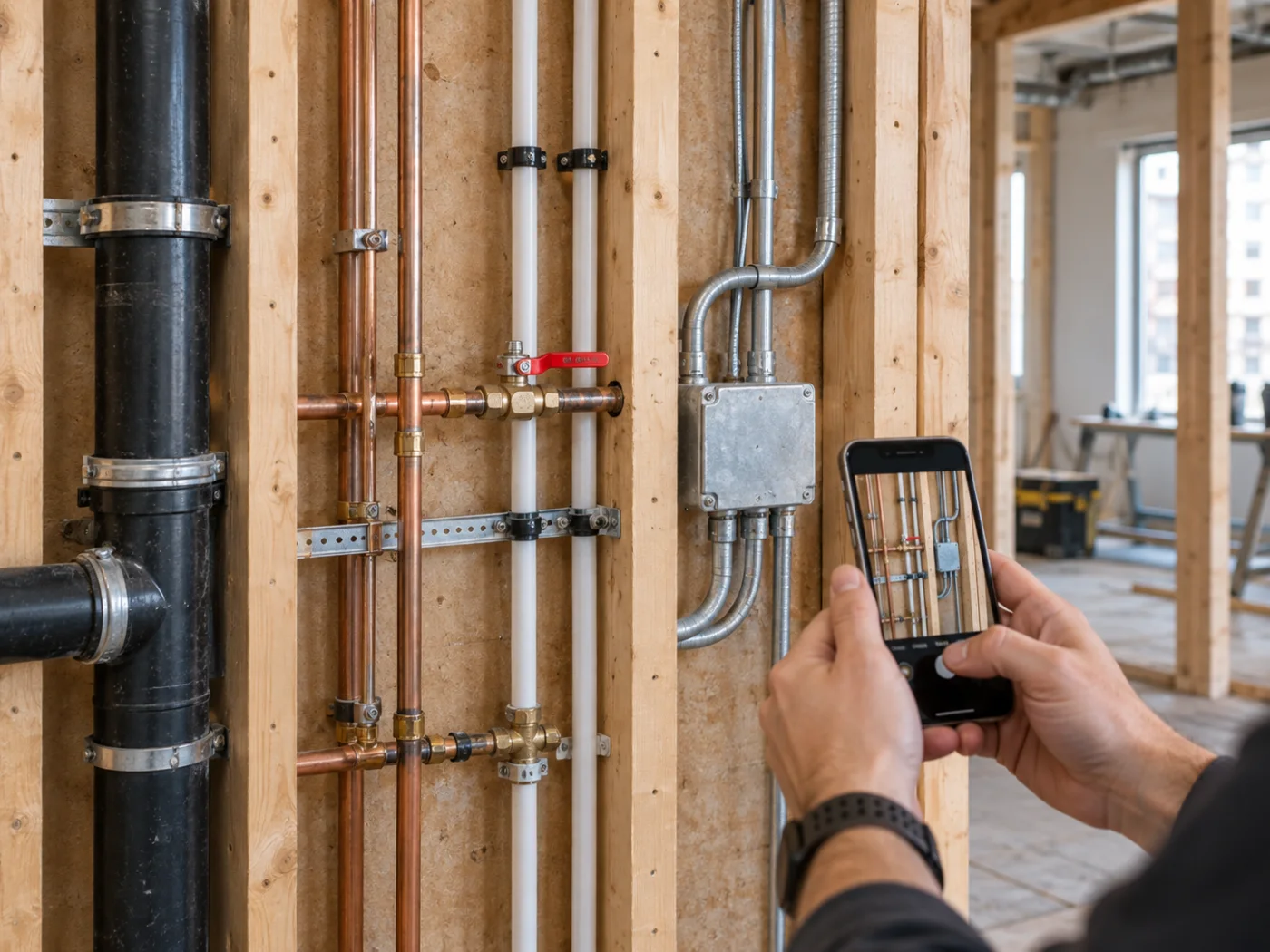
Document cables, pipes and ducts before the wall is closed, while their routes are still visible. A short record at that stage can reduce later survey work and avoidable rework, instead of leaving the next team to guess.
Capture before the finish goes on
Photograph or scan the open wall from several known positions. Include the room identifier, orientation, scale reference and nearby fixed features. Record which trade installed each service and the date. Keep the approved drawings and inspection records with the capture; photos alone can be misleading when dimensions are not clear.
Mark important details
Label junctions, shutoffs, penetrations, unusual routing and areas that must remain accessible. Distinguish verified observations from estimates. Have the responsible trade or site lead review the record before closing the wall, then link it to the room and asset handover package.
Make it usable later
Facilities staff need a quick way to find the right wall and the right version. A site-oriented digital twin can keep this context near the physical location and display annotations during a later visit. Always verify concealed conditions using appropriate survey and safety procedures before cutting or drilling.